Are you thinking about tapping into your home’s equity to get extra cash? Understanding cash out refinance rates is key to making the smartest financial move.
These rates directly affect how much you’ll pay monthly and the total cost of borrowing. But with so many lenders and offers out there, how do you find the best rate for your situation? You’ll discover what current cash out refinance rates look like, what factors influence them, and how to compare offers to save money.
Keep reading to learn how you can turn your home’s value into cash while keeping your costs low.
Current Refinance Rates
National refinance rates have shifted slightly this month. Average cash-out refinance rates tend to be higher than rate-and-term refinance rates because lenders see more risk. Most rates hover around 6% but can vary by lender and credit score. These rates affect monthly payments and loan costs.
In Austin, Texas, rates often match the national average but may be a bit lower due to local market conditions. Local lenders may offer special deals or lower fees, which can help save money. Checking multiple lenders is key for the best offer.
| Type of Refinance | Typical Rate Range | Key Feature |
|---|---|---|
| Cash-Out Refinance | 6.0% – 6.5% | Higher rates; access to home equity |
| Rate-and-Term Refinance | 5.5% – 6.0% | Lower rates; changes loan terms only |
Factors Affecting Rates
Credit score plays a big role in setting refinance rates. Higher scores get lower interest rates, which means less money paid over time. Scores below 620 may face higher rates or even denial.
The loan-to-value (LTV) ratio shows how much you owe compared to your home’s value. A lower LTV means more equity and often better rates. Lenders see high LTV as riskier, leading to higher rates.
Property type affects rates too. Single-family homes usually get better offers than condos or multi-unit properties. Lenders consider some properties harder to sell if needed, so rates can be higher.
Choosing The Right Lender
National lenders offer a wide range of loan options and often have competitive rates. They usually have more resources and technology for quick processing. Local lenders may offer more personalized service and better knowledge of your area’s market. They might be more flexible with credit requirements.
Choosing between national and local lenders depends on your needs. Comparing offers from both types can help you get the best deal.
| Lender Type | Advantages | Disadvantages |
|---|---|---|
| National Lenders | More loan options, faster processing, competitive rates | Less personal service, strict guidelines |
| Local Lenders | Personalized service, local market knowledge, flexible terms | Fewer options, possibly higher rates |
Top lenders to consider include Bank of America, Navy Federal Credit Union, and PNC Bank. These lenders have strong reputations and offer cash-out refinance loans nationwide.
Online rate calculators help estimate your monthly payments and compare lenders quickly. Use tools like NerdWallet’s Refinance Calculator to see real-time rates and customize offers for your situation.
Costs Beyond Interest Rates
Closing costs are fees paid at the end of a refinance loan. They include things like appraisal fees, title insurance, and lender fees. These costs can add up to 2-5% of the loan amount. Knowing these fees helps you avoid surprises.
Some lenders offer no down payment options for cash-out refinancing. This means you do not need to pay money upfront to start the refinance. But watch out for higher interest rates or extra fees that might come with this choice.
Potential fees to watch for include prepayment penalties, document fees, and credit report charges. These can increase your total cost. Always ask for a clear list of fees before signing any papers.
Maximizing Savings Tips
Improving your credit score can lower your refinance rate. Pay bills on time. Keep credit card balances low. Check your credit report for errors and fix them quickly. A higher score means better offers.
Timing your refinance right saves money. Rates often change monthly. Try to refinance when rates drop. Also, consider how long you plan to stay in your home. The longer you stay, the more you save.
Negotiating terms can reduce costs. Ask lenders about lower fees. Request better interest rates or loan terms. Compare offers from multiple lenders to find the best deal. Small changes add up to big savings.
:max_bytes(150000):strip_icc()/Investopedia-terms-cash_out-refinance-7a7a8b788e544e22ab9f72a09a99cd81.jpg)
Alternatives To Cash-out Refinance
Home Equity Line of Credit (HELOC) offers flexible borrowing using your home’s equity. You can borrow up to a set limit and pay interest only on what you use. HELOCs often have variable rates, which might change over time. They are good for ongoing expenses or emergencies. But monthly payments can rise if interest rates increase. Also, the loan is secured by your home, so missed payments risk foreclosure.
Personal Loans vs Refinance differ mainly in purpose and cost. Personal loans usually have higher interest rates but don’t require home equity. They are quick and easy to get, often with fixed payments. Cash-out refinance replaces your existing mortgage with a new one, possibly at a lower rate, and gives cash from your home’s equity. It usually has lower interest but takes longer to close.
| Option | Pros | Cons |
|---|---|---|
| HELOC | Flexible borrowing, pay interest on used amount | Variable rates, risk of foreclosure |
| Personal Loan | No home equity needed, fixed payments | Higher interest rates, shorter terms |
| Cash-Out Refinance | Lower rates, consolidates debt | Closing costs, longer process |
Using Cash-out Funds Wisely
Debt consolidation is a smart way to use cash-out funds. It helps pay off multiple debts with one loan. This often lowers your monthly payments. You can save money on interest and reduce stress.
Home improvements can increase your home’s value. Use cash-out money to fix kitchens, bathrooms, or add energy-efficient features. These upgrades make your home more comfortable and attractive to future buyers.
Investment opportunities include starting a small business or buying stocks. Using cash wisely can grow your wealth over time. Careful planning helps you avoid extra debt and risk.
Common Questions
Cash-out refinance loans do not require a down payment. Most lenders ask for closing costs instead. These costs include fees for appraisals, title searches, and loan processing. Closing costs usually range from 2% to 5% of the loan amount. It is important to plan for these extra costs before applying.
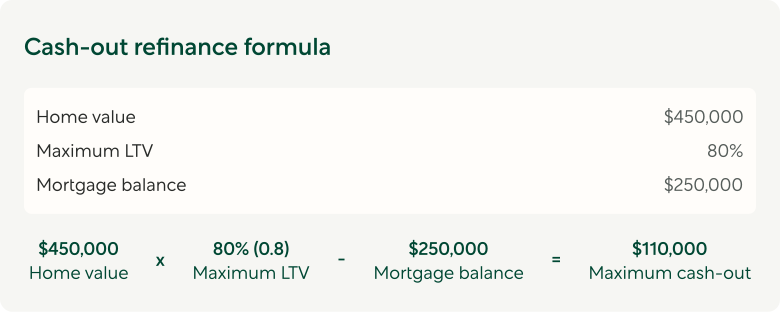
To estimate the borrowing amount, check your home equity. Home equity is the home’s current value minus what you owe. Most lenders allow you to borrow up to 80% of your home’s value. For example, if your home is worth $300,000 and you owe $200,000, you may borrow up to $40,000 ($300,000 x 80% – $200,000).
Monthly payments will change after refinancing. The new payment depends on the loan amount, interest rate, and loan term. Cash-out refinances often have slightly higher rates. Use a refinance calculator to see how payments may rise or fall. This helps plan your budget better.

Frequently Asked Questions
What Are The Current Rates For A Cash-out Refinance?
Current cash-out refinance rates typically range from about 6. 0% to 7. 0%, depending on credit, loan amount, and lender. Rates vary daily and by location. Use online tools like NerdWallet or Bank of America’s calculator to find personalized, up-to-date offers.
What Is The 2% Rule For Refinancing?
The 2% rule for refinancing means your new loan’s interest rate must be at least 2% lower than your current rate. This ensures refinancing saves money after closing costs.
Can A 70 Year Old Woman Get A 30 Year Mortgage?
Yes, a 70-year-old woman can get a 30-year mortgage. Approval depends on income, credit, and lender policies.
What Is The Monthly Payment On A $400,000 Loan At 7%?
The monthly payment on a $400,000 loan at 7% interest is approximately $2,661. 21 for a 30-year term.
Conclusion
Choosing the right cash-out refinance rate takes time and careful thought. Compare offers from different lenders to find the best deal. Remember to consider all costs, including closing fees and interest rates. Understanding your financial goals helps you decide if cash-out refinancing fits your needs.
Keep an eye on current rates and market trends for smarter decisions. Taking small steps now can save you money later. Stay informed and make choices that support your financial future.
Read More
- Current Mortgage Interest Rates: What Homebuyers Need to Know Today
- 30 Year Fixed Mortgage Rates: What You Need to Know Now
- Buy to Let Mortgage Rates UK: Unlock Best Deals Today
- Jumbo Mortgage Rates Today: Unlock Low Rates & Save Big
- Lowest Refinance Mortgage Rates: Unlock Big Savings Today!
- Best Refinance Lenders Online: Top Picks for Low Rates Today
- Home Refinance Savings Calculator: Maximize Your Mortgage Savings Today
- Mortgage Refinance Closing Costs: What You Need to Know Today
- Va Home Loan Interest Rates: Unlock Best Deals Today
- Fha Mortgage Loan Rates: Unlock Today’s Best Deals Now